Banz & Bowinkel AR
- アートデザイン
- 1.11
- 53.7 MB
- by Friedemann Banz
- Android 9.0+
- Mar 18,2026
- パッケージ名: com.banzbowinkel.App
App Concept: "Binary Horizon" – An Augmented Artistic Companion for Banz & Bowinkel
“A tool not to replace the hand, but to expand the mind’s gaze.”
🌐 App Title: Binary Horizon
A Generative Interface for the Symbiotic Imagination
🎨 Core Purpose
Binary Horizon is a digital companion app designed to amplify and reflect the artistic methodology of Banz & Bowinkel—exploring the threshold between virtual and physical reality, the logic of machines, and the fluidity of human perception.
Rather than a passive viewer of their work, the app becomes a co-creative environment, inviting users to step into the artists’ conceptual space and experiment with the very tensions they investigate: code vs. intuition, logic vs. emotion, screen vs. world.
🧠 Philosophical Foundation
Inspired by Banz & Bowinkel’s focus on:
- The binary logic of machines as alien yet omnipresent
- The screen as mediator of reality
- The blurred boundary between digital simulation and physical experience
The app operates as a non-linear, generative interface, where every interaction introduces a subtle dissonance—like a glitch in perception, a shift in scale, or a recursive loop. It does not explain; it evokes.
🔧 Key Features
1. Echo Chamber (Generative Feedback Loop)
- A live, evolving visual field generated from user input (mouse movements, touch, ambient sound via mic).
- The output is not rendered directly—it is translated through a fictional "machine language" (abstract glyphs, shifting grids, flickering thresholds).
- The screen becomes a mirror of internal states, where human gesture is parsed through algorithmic abstraction, mimicking how machines "misunderstand" reality.
“The machine sees not the hand, but the trace.”
2. Reality Fold (Augmented Perception Mode)
- Uses smartphone camera and AR to superimpose impossible geometries onto the physical world (e.g., a floating staircase folding into a wall, a doorway that opens into a void).
- These digital forms are generated from Banz & Bowinkel’s past works—reinterpreted through generative algorithms that distort space, time, and scale.
- The user walks through a familiar room, now subtly altered—the screen no longer reflects the world, but rewires it.
“Where does the screen end and the world begin?”
3. Binary Memory (Echo Archive)
- A fragmented, non-linear archive of Banz & Bowinkel’s process: sketches, code snippets, failed experiments, discarded iterations.
- Not a museum. Not a timeline. Instead, a dream-like feed that surfaces memories based on user behavior (e.g., if you pause, a forgotten sketch appears; if you touch the edge, a corrupted audio fragment plays).
- All entries are tagged with meta-data in binary, but rendered in human language—like a dream log written in machine code.
4. The Threshold Interface (User as Participant)
- No buttons. No menus.
- Interaction is minimal: a flicker of light, a shift in sound, a pixel that resists being mapped.
- The app resists control. It resists being understood. Like their work, it refuses to offer closure.
“To use this app is not to master it—but to become aware of how it masters you.”
🖥️ Aesthetic Language
- Color: Monochrome shifts—grayscale with sudden pulses of data-color (e.g., 01001111 → "O" in ASCII, rendered as a soft blue flash).
- Sound: Ambient textures derived from machine noise, slowed-down code execution, or the faint hum of a server farm—remixed into meditative audio fields.
- Typography: Custom font based on early computer terminals (like Teletype), but subtly corrupted—letters bleed, lines warp.
🔄 Philosophical Experience
Users don’t "use" Binary Horizon. They encounter it.
Each session ends with a question, not an answer:
“Was that real?”
“Or did the screen just show me what I was ready to believe?”
This mirrors Banz & Bowinkel’s central inquiry: In a world where perception is mediated by code, how do we know what is true—and what is beautiful?
🌍 Distribution & Integration
- Platform: iOS / Android (ARKit / ARCore)
- Physical Extension: Can be paired with a small, custom hardware device (e.g., a handheld "perception lens") that projects simple AR forms into real space—blending digital gesture and physical presence.
- Website Integration: www.banzbowinkel.de hosts a portal to the app, with generative login sequences that change based on time, location, or user behavior.
📝 Epilogue: The Artist’s Note (Embedded in App)
“We do not build worlds. We reveal the ones already there—under the skin of code.”
— Banz & Bowinkel, 2024 (unreleased)
✨ Final Thought
Binary Horizon is not just an app. It is a sensorium of the digital uncanny, a living gesture in the ongoing dialogue between Banz & Bowinkel and the world they help to see.
It does not answer questions.
It only invites you to wonder:
What if the screen isn’t a window… but a mirror?
For more, visit: www.banzbowinkel.de/binaryhorizon
Status: Generative prototype in development.








-
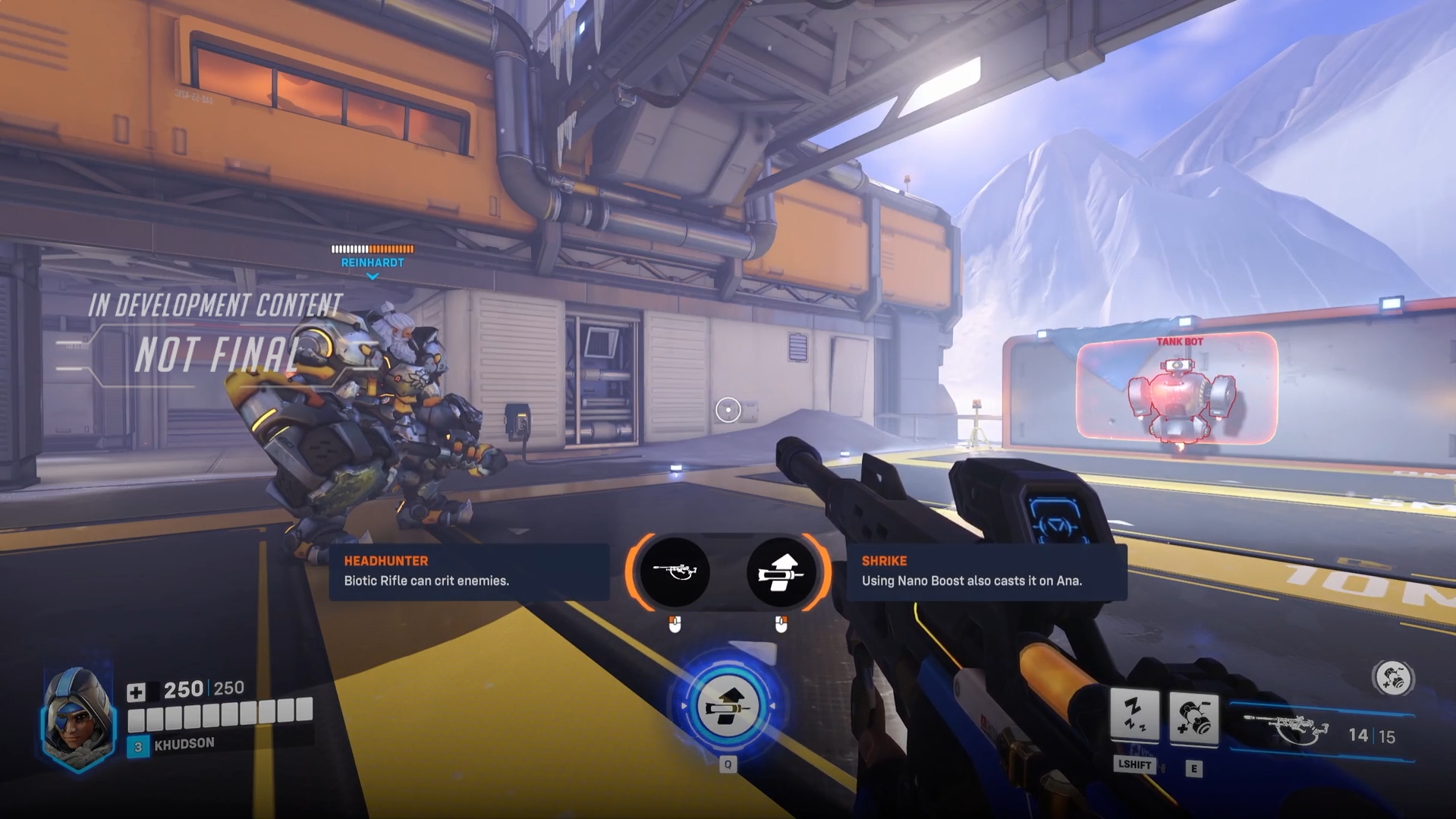 「オーバーウォッチ2」の大規模刷新へ、マーベル・ライバルズの台頭を歓迎する Blizzard
Marvel Rivalsは、公開以来Overwatchとの比較を避けられてきませんでした。その核心部において、Marvel RivalsはBlizzardのゲームを模倣しており、プレイ可能なキャラクターとしてMarvelのヒーローとヴィランが登場するものの、目に見えて類似したメカニクスとゲームプレイを持つ競争型のマルチプレイヤーヒーローシューターであり続けています。Marvel RivalsとOverwatch 2の両方は無料プレイであり、ライブサービスとして収益化され、新鮮な体験を保つために
Sep 19,2026 -
『ブラックオプス6』シーズン3のアップデートノートが公開
クラッシュ・ロワイヤルのプレイヤーたちは、ほぼ10年の歳月を経て、ついに強化されたインフェルノドラゴンを解き放つことができるようになりました。この待ち望まれていた進化により、火の怪物である伝説的なドラゴンは大幅なパワーアップを遂げます。この発表を祝って、Supercellはフィンランドのコメディアン、イスマ・レイコーラを招き、ユニークなショーケースを開催しました。火を纏った交渉が主役!アリーナで9年間待機していたインフェルノドラゴンが、新しい『クラッシュ・ロワイヤル』のトレーラーで主役を務めます
Sep 19,2026 - ◇ 「エリオ」興行不振を受け、ピクサー幹部が「オリジナル作品制作は厳しい時期」と認めるも、代替案は「トイ・ストーリー27」 Sep 16,2026
- ◇ ディズニーマジックマッチ3D事前登録受付開始 Sep 15,2026
- ◇ 「WoW、Plunderstormの力を明らかに」 Sep 14,2026
- ◇ 『アルビオン・オンライン』の「アビスデプス」アップデート、リリース目前に迫る Sep 13,2026
- ◇ 『ドラゴン Raja』最新サマーカニバルアップデートで新クラスとレイドコンテンツ追加 Sep 13,2026
- ◇ Samsung Odyssey Neo G8 4Kモニターがクーポン利用で$499に Sep 12,2026
- ◇ 『デビル・ウィズ・プラダ2』ティザー映像でメリル・ストリープとアン・ハサウェイが象徴的なキャラクターとして再会し、ファンに初お披露目 Sep 10,2026
- ◇ カレンダーには12のこれがある、短縮形のクロスワードクイズ - 頑張るガイド Sep 09,2026
- ◇ スターブリーズ、『ダンジョンズ&ドラゴンズ』開発中止、ペイデイの人員削減へ Sep 07,2026
- ◇ YouTubeの架空映画予告チャンネル2つを削除したGoogleをファンが祝う Sep 07,2026

- 1 Infinity Nikkiですべての能力衣装を得る方法 Feb 28,2025
- 2 Pokémon GO Fest 2025: 日程、場所、イベント詳細 Jan 08,2025
- 3 ウクライナのインターネットが「S.T.A.L.K.E.R.」として停止2分リリースで圧倒 Dec 30,2024
- 4 Black Myth: Wukong が発売数日前に Steam チャートでトップに Jan 07,2025
- 5 PokémonTCGポケット:不思議な日付、時刻、およびプロモーションカード - 2025年2月 Mar 03,2025
- 6 韓国のシムズのようなインゾイは、2025年3月に遅れました Mar 01,2025
- 7 スターシードアスニアトリガーコード(2025年1月) Mar 06,2025
- 8 アサシンの信条の影は、強化のために2025年3月に延期されました Feb 21,2025





-
予算編成と投資:金融アプリのガイド
合計 9
-
迅速なプレイのための中毒性の超高性ゲーム
合計 10